


Collection:
Automotive Window Tint
Professional automotive window film by the roll, from Solar Gard, ASWF and TintCenter. Choose from non-reflective dyed films, high-performance (HP) films and color-stable films, in shades from 88% visible light down to 3% limo tint.
Choose by what matters
- Check your state's limit Every state sets its own darkness limits, window by window. Look yours up, with the law quoted, before you pick a shade. Find your state →
- Most heat outA metal layer reflects heat, so these reject the most.
- Solar Gard HP Quantum from $31
- Solar Gard HP Charcoal from $30
- ASWF Performer Dyed Metal from $24
- Solar Gard HP Supreme from $30
- Stays blackLifetime warranties that cover fading.
- ASWF Excel Color Stable from $28.53
- Solar Gard Galaxie True Black Color Stable from $27
- No metal, GPS friendlyPhones, GPS and toll tags work as usual.
- TintCenter HP Neutral from $24
- Lowest priceNon-reflective dyed film with a 5-year warranty.
- ASWF Retro Non-Reflective from $19
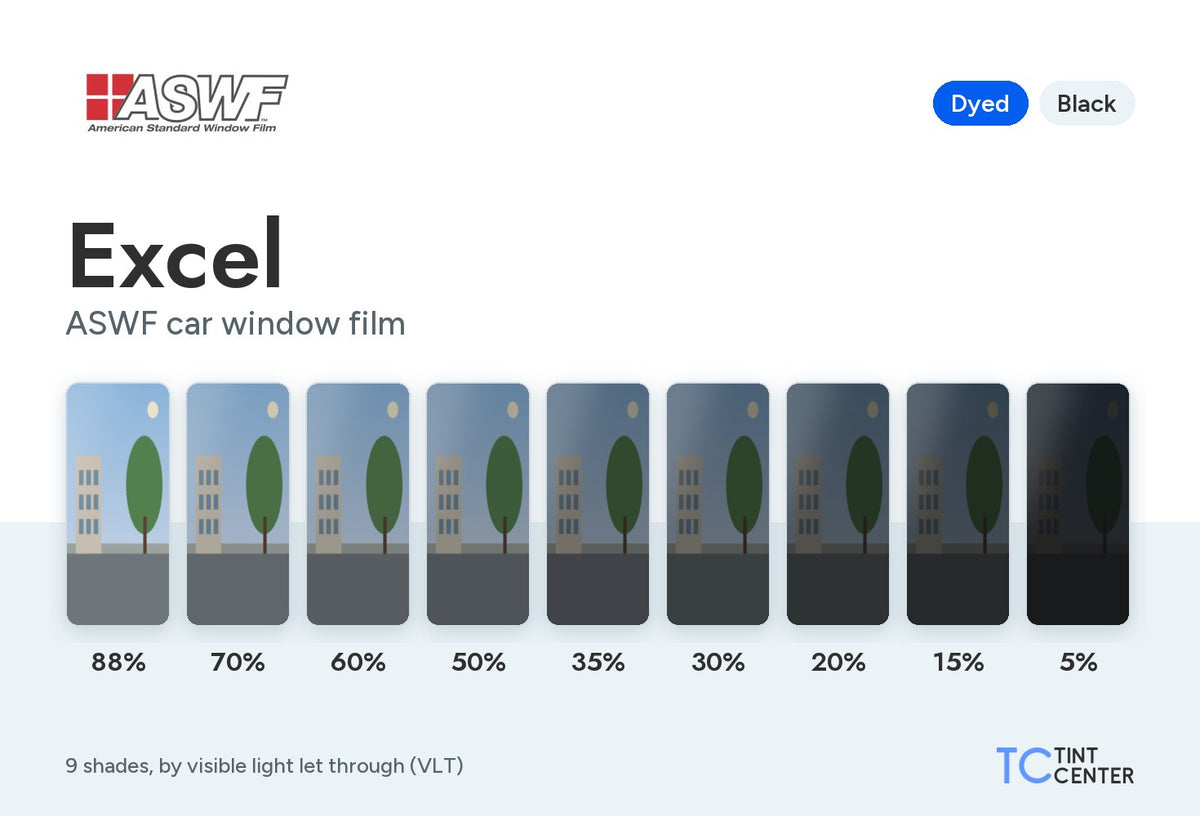


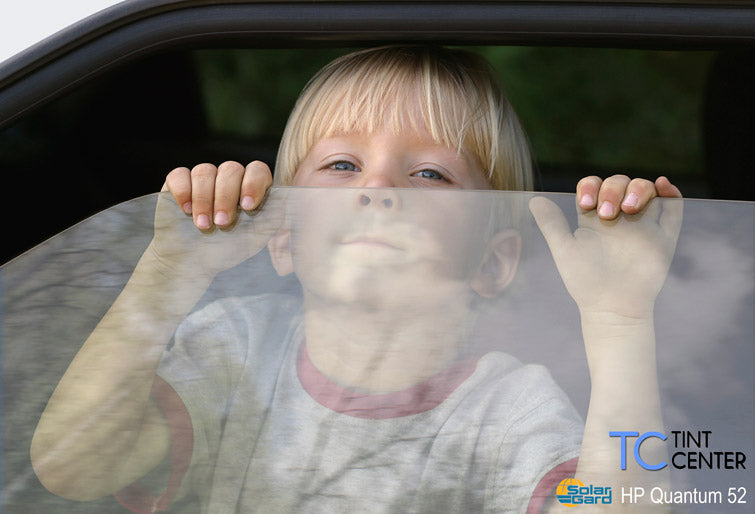


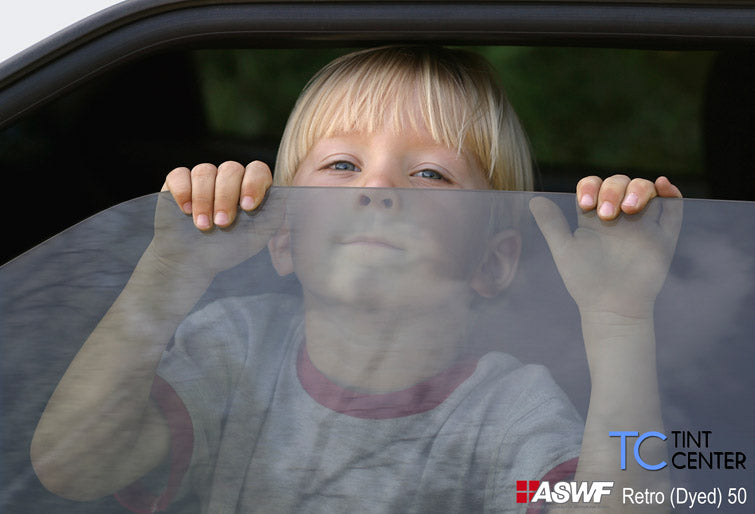
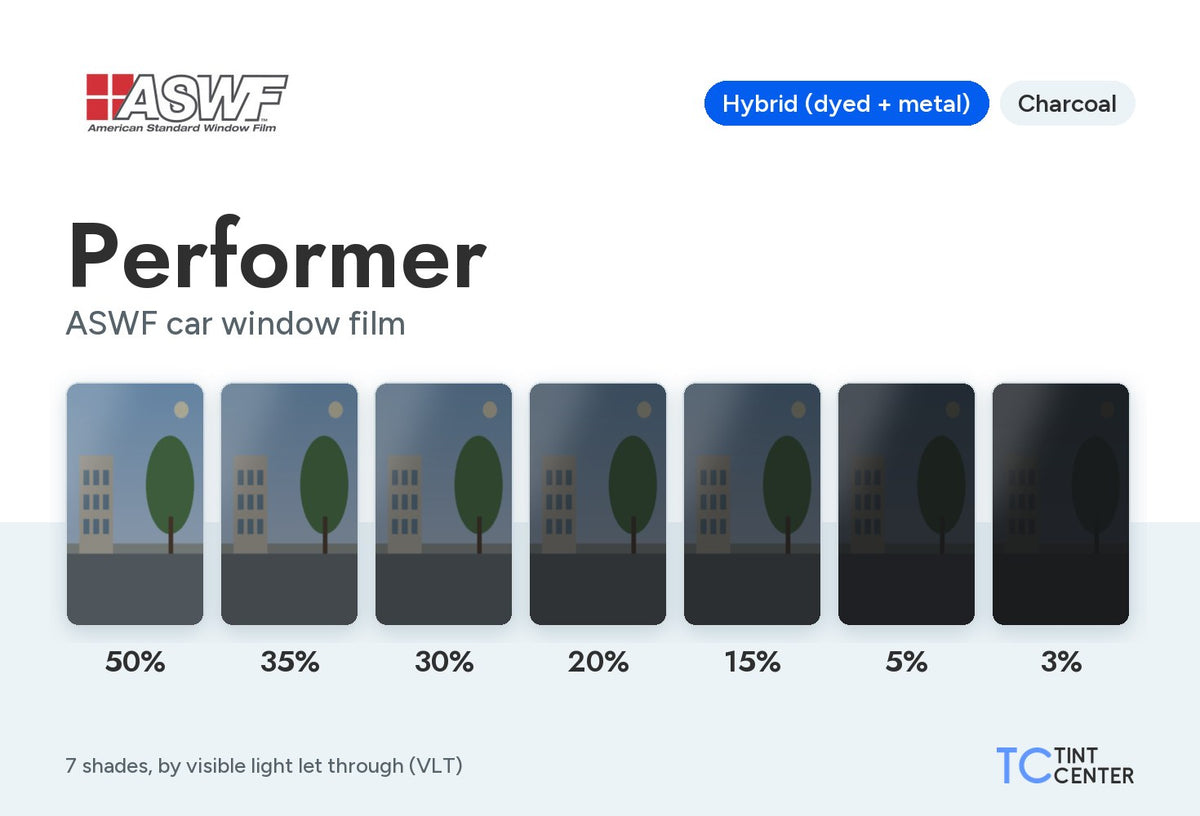

Most films come in 20", 40" and 60" widths and 10, 25, 50 and 100 ft rolls, so you can buy a single-car roll or a full shop roll. Every film page has a spec table for each shade (visible light, UV, heat rejection and glare) so you can compare before you buy.
Check your state's tint law before you install: see our state tint law guide.
Looking for precut car tint kits instead of rolls? Try our partner SnapTint.
Car window tint: common questions
How dark can I go?
It depends on your state and on the window: states set separate limits for the front side windows, the rear side windows, the back window and the windshield strip. Look up your state's limits, with the law quoted.
What does the percentage mean?
It's VLT (visible light transmission), the share of light the film lets through: 5% is limo dark, 70% is barely tinted. Your car's glass has a little tint of its own, so film on glass ends up darker than the film's number.
Dyed, metal or color stable: which film?
Dyed film is the lowest-cost and non-reflective. Films with a metal layer (Solar Gard HP, ASWF Performer) reject the most heat. Color-stable films (ASWF Excel, Solar Gard Galaxie) carry lifetime warranties that cover fading. Each film's spec table gives every shade's heat and UV figures.
Will tint block my GPS or phone?
Film with a metal layer can weaken radio, GPS and toll-tag signals on some cars. TintCenter HP Neutral has no metal layer, so it doesn't.
Can I tint my own car?
Yes, with patience. Flat side windows are the place to start; the curved back window means shrinking the film to the glass with a heat gun, which takes practice. Watch how it's done.
How long does it last, and what does a shop charge?
Both depend on the film and the car. How long tint lasts. What a tint job costs. How to pick a shop.
Before you buy
- Check your state's limits. Each state sets its own limit for each window, and some allow medical exemptions. Look up your state.
- Count the factory tint. Most car glass is slightly tinted already, so film on the glass ends up darker than the film's own number. The window is measured with the film on.
- Pick a width. Most films come 20", 40" and 60" wide; measure your largest window before you choose.
What the numbers mean: window film glossary. Every line and its specs: window film brands.